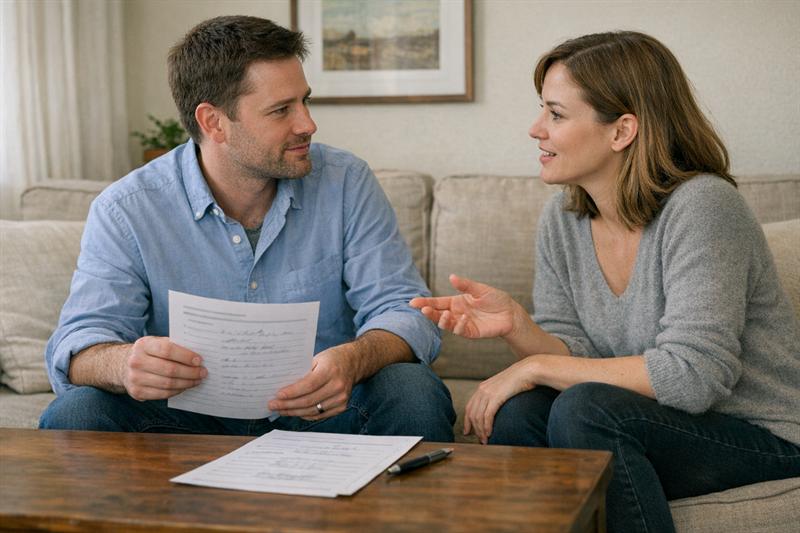
Quick Answer: Couples therapy works when it changes how partners interact, not just how they talk about problems. It tends to fall short when conversations repeat but behavior stays the same.
Most couples asking this question are already feeling stuck. The same argument keeps happening. One person pushes, the other shuts down. Or both feel unheard and nothing improves.
The real issue is not just whether therapy “works.” It’s whether it changes the patterns driving the relationship. That’s what determines whether things actually improve.
At Healthy Relationships Counseling Services, the focus is on identifying those patterns, interrupting them, and replacing them with responses that work in real life.
Does Couples Therapy Work? A Clear, Honest Answer
Couples therapy can be effective when both partners actively work on changing how they respond to each other. It becomes less effective when sessions turn into repeated conversations without new behavior outside the office.
Many couples gain insight, agree on what’s wrong, and still go home and repeat the same reactions. When that happens, therapy feels frustrating and progress slows.
When therapy is structured and focused on skill-building, it can support changes in communication, emotional responses, and conflict patterns. Those changes are what move the relationship forward.
Why Some Couples See Real Change (And Others Don’t)
The difference is not just effort. It’s how that effort is used.
Readiness vs. Resistance
Couples who make progress are usually willing to look at their own role in the problem. Those who don’t tend to stay focused on what their partner is doing wrong.
A common pattern is waiting for the other person to change first. That keeps both people stuck and makes real movement harder.
Skill-Building vs. Venting
Talking about problems can feel productive, but it does not create change on its own.
This is where many couples get stuck. Sessions become a place to vent instead of a place to learn new ways of responding. Without new skills, the same arguments usually continue outside therapy.
Consistency Over Intensity
Big emotional moments can feel important, but they don’t create lasting change by themselves.
Progress comes from applying new behaviors consistently between sessions. When that doesn’t happen, the relationship often returns to old patterns.
For a deeper look at why therapy can stall, see when couples therapy isn’t working and what to do next.
What Actually Changes in Effective Couples Therapy
- Communication becomes more direct and less reactive
- Emotional triggers are recognized earlier and handled more intentionally
- Conflicts resolve more efficiently instead of repeating in the same way
- Partners interpret each other more accurately
These changes show up in day-to-day interactions, not just inside sessions.
Communication Patterns
Couples may interrupt less, escalate less quickly, or shut down less often. Conversations become clearer and more focused.
This directly affects recurring cycles like the pursuer-withdrawer pattern. If that dynamic feels familiar, this breakdown explains how it develops and how to interrupt it.
Emotional Reactions and Triggers
Instead of reacting immediately, partners start to notice what they’re feeling and choose how to respond.
This can reduce escalation, which is where many conflicts intensify.
Conflict Recovery (Not Just Avoidance)
Healthy relationships still have conflict. The difference is how they recover from it.
Arguments become shorter, and repair happens more quickly instead of dragging on.
Perception of Each Other
Partners begin to question negative assumptions and see each other more accurately.
This shift is closely tied to emotional safety. For a deeper explanation, see what emotional safety in relationships looks like and how to build it.
The 4 Conditions That Make Couples Therapy Work
- Willingness to Examine Your Own Role
- Learning and Practicing New Skills
- Honest Feedback During the Process
- Clear Direction, Not Just Open Conversation
Willingness to Examine Your Own Role
Change starts when both partners look at their own contribution to the dynamic.
Without this, sessions tend to revolve around blame instead of progress.
Learning and Practicing New Skills
New communication and self-regulation skills need to be used outside sessions to matter.
This is where many couples either gain traction or stay stuck.
Honest Feedback During the Process
Progress is stronger when therapy is adjusted based on what is and isn’t working.
A feedback-informed approach can help keep sessions focused and prevent drift.
Clear Direction (Not Just Open Conversation)
Unstructured conversations often repeat the same issues.
Clear direction keeps sessions focused on specific changes that can be noticed in daily life.
If you recognize these patterns, it may be a sign that support would help:
- You keep having the same argument with no resolution
- One of you shuts down while the other pushes harder
- Conversations escalate quickly and feel difficult to manage
- You often leave discussions feeling worse, not better
When these patterns keep repeating, they often do not shift on their own. Structured support can help interrupt them.
What Couples Therapy Does NOT Do
- It does not fix your partner
- It does not eliminate all conflict
- It does not work without active participation
- It does not guarantee the relationship will continue
Expecting these outcomes often leads to frustration and disappointment.
How to Tell If It’s Working
- Arguments become less repetitive
- Conflicts resolve more quickly
- You understand each other more clearly, even when you disagree
- Emotional reactions feel less intense and easier to manage
Progress usually shows up in small, consistent shifts. If those shifts aren’t happening, the process may need adjustment.
When Couples Therapy May Not Be Effective
There are situations where therapy may struggle to gain traction.
- One partner is not willing to participate
- There is ongoing dishonesty or a major lack of transparency
- Sessions lack structure or direction
- Outside stressors are overwhelming the process
When these factors are present, frustration often builds and disconnection can deepen over time.
How the Right Approach Changes Outcomes
Not all couples therapy works the same way. The approach matters.
Structured, skills-based therapy focuses on changing real interactions, not just exploring feelings. A feedback-informed approach tracks progress and adjusts when needed, which can help avoid long periods without improvement.
Healthy Relationships Counseling Services uses this kind of structured, feedback-driven approach to keep therapy focused on real change, not just ongoing conversation.
Conclusion
Couples therapy works when it changes patterns. Without that, the same issues usually repeat.
When those patterns are left alone, they often become more entrenched. Arguments may become more frequent, emotional distance can grow, and the relationship starts to feel harder to maintain.
Healthy Relationships Counseling Services focuses on identifying these patterns early and replacing them with skills that work outside the therapy room. If you’re dealing with repeated conflict, emotional distance, or stalled progress, the next step may be to address it directly with a structured approach.
To see how that process works, start with what to expect in couples counseling sessions and take a clear next step toward change.
Key Takeaways
- Couples therapy works when interaction patterns change
- Insight alone does not create results
- Structured, skills-based approaches can lead to stronger outcomes
- Progress shows up in consistent behavioral shifts
- Without change, patterns tend to repeat and become more entrenched
FAQ
Does couples therapy work for all relationships?
No. It works best when both partners are willing to participate and make changes. When one partner is disengaged, progress is usually limited. In some cases, individual counseling or discernment counseling can be a starting point.
How long does couples therapy take to work?
It varies, but early progress often shows up within a few sessions through better communication or less intense conflict. If nothing is changing, the approach may need to be adjusted.
Can couples therapy fix a relationship completely?
No. Therapy can improve how couples handle problems rather than eliminate them entirely. Most relationships still face conflict, but they may manage it more effectively.
What percentage of couples therapy is successful?
Results vary depending on participation, fit, and approach. Structured, skills-based therapy tends to produce more consistent outcomes. The method used plays an important role.
What if only one partner wants therapy?
Progress is limited without both partners involved. However, individual work can still help shift patterns, improve clarity, and support better decisions about next steps.
Is couples therapy worth it if we argue a lot?
Often, yes. Frequent arguments usually point to a repeating pattern. Without a change in how those conflicts are handled, that pattern often continues. Therapy can provide a way to interrupt it and build better ways of handling conflict.