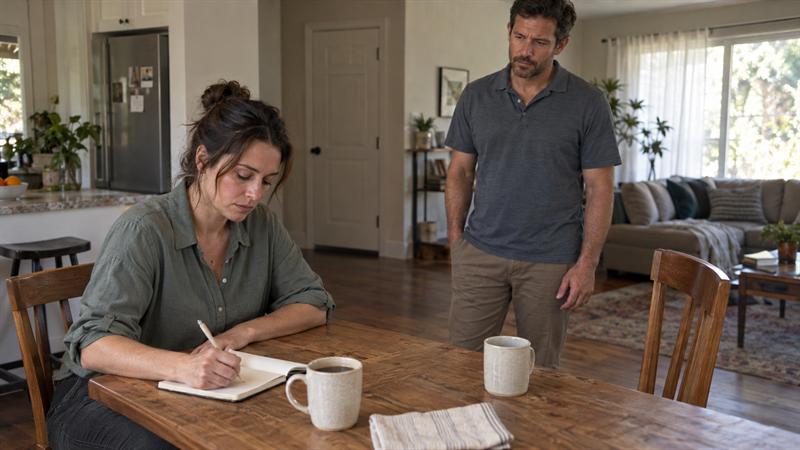
At Healthy Relationships Counseling Services, many couples are serious about change but still feel discouraged by what happens before the next appointment. A session may feel productive, both people may leave with good intentions, and then daily life takes over. That is often where momentum starts to slip. Without a clear plan for the days between sessions, the same argument can return, the same shutdown can happen, and therapy can start to feel less effective than it is.
Why the Time Between Sessions Matters
Couples therapy can help people understand the pattern more clearly, but the pattern usually shows up fastest at home, not in session. That matters because insight by itself rarely changes the relationship. What changes things is what each person does when the pattern shows up again.
A common mistake is expecting the breakthrough to happen in session and the rest of the week to take care of itself. Usually, it does not work that way. Progress often shows up in smaller shifts: an argument gets interrupted sooner, one partner notices escalation earlier, or repair happens the same day instead of stretching into days of distance.
This is why the time between sessions matters. It is where new responses get tested under real stress. It is also where a therapist may get some of the clearest information about what is actually happening in the relationship. For a closer look at why follow-through matters, see what makes couples therapy work and what actually changes.
- Sessions build clarity
- Daily life reveals the real pattern
- Practice between sessions helps turn insight into change
What to Do Right After a Couples Therapy Session
The first day after a session matters more than many couples expect. This is where progress either gets organized or gets lost. If both people leave with different ideas about what happened, confusion can take over quickly.
Compare Takeaways Before Assumptions Set In
Do a short check-in soon after the session. Not another full processing conversation. Just enough to answer three questions: What stood out? What felt important? What are we focusing on before the next appointment?
In relationship work, two people can leave the same session with different takeaways. One may think the goal is better communication. The other may think the goal is less criticism. If that mismatch goes unchecked, both partners can start judging the other for “not doing the work” when they were never fully aligned in the first place.
Choose One or Two Skills to Focus On
Trying to change everything between sessions usually leads to overwhelm or another fight. A better approach is to pick one or two clear behaviors and repeat them. That might be using a pause phrase, limiting hard conversations to shorter check-ins, or noticing the first sign of escalation.
The goal is not intensity. The goal is carryover. If a skill only works in theory, it may not be ready to use consistently yet.
Avoid Trying to Resolve Everything at Once
This often gets worse when couples leave therapy feeling hopeful and then try to clear every resentment before that feeling fades. Too much processing can turn the week into one long relationship meeting. That can create exhaustion, defensiveness, and dread.
Progress between sessions usually works better when the focus is narrow. One useful shift practiced consistently often does more than several emotional conversations that go nowhere.
7 Helpful Things to Practice Between Sessions
This is the part most couples need: not more insight, but more structure.
1. Notice the Pattern, Not Just the Topic
The topic is rarely the whole problem. A fight about chores, money, sex, parenting, or texting often has an underlying pattern running it. One partner criticizes, the other defends. One pushes for resolution, the other shuts down. One gets louder, the other disappears.
If you only focus on the topic, you may miss the process that keeps bringing it back. This is why many couples feel like they are arguing about different issues when the emotional sequence is very similar each time. For more on that cycle, read how to stop having the same argument over and over.
2. Use Shorter, Safer Check-Ins Instead of Marathon Conversations
Long, open-ended talks are where many couples lose traction. The conversation starts in one place and ends in several unresolved places. That often leaves both people more hurt and less clear.
A shorter check-in usually works better. Pick one topic. Set a clear purpose. Stop when the discussion starts sliding into blame, mind-reading, or old grievances. More talking is not the same as more progress.
3. Practice Repair After Small Conflicts
Repair is one of the clearest signs that the work is starting to carry over. That does not mean conflict disappears. It means the relationship may recover faster.
Repair can sound like: “That came out sharper than I meant.” “I see why that landed badly.” “Can we start this part over?” “I need a break so this does not get worse.” These smaller moments matter because they can build trust before a bigger conflict tests it. If repair is hard, how to repair a relationship after a fight gives a deeper breakdown.
4. Track Triggers and Emotional Escalation
Many couples think a tool failed when the real issue was timing. They tried to use it after both people were already overwhelmed. At that point, emotion is usually driving the conversation more than skill.
This is where many couples get stuck. They wait until the argument is fully active, then try to communicate perfectly. That often leads to more frustration because the tool gets blamed when the real issue was escalation. If you notice faster breathing, sharper tone, talking over each other, shutting down, or feeling the need to win, the conversation is already moving in the wrong direction.
If this pattern sounds familiar, signs you’re emotionally flooded can help you recognize it earlier.
5. Write Down a Few Real Examples for the Next Session
You do not need a long journal. You need usable detail. A few brief notes are enough: what happened, what each person did, where it escalated, what helped, and what did not.
This can make the next session much more productive. “We had a bad week” does not tell the therapist much. “We had the same shutdown after a money conversation, but this time we paused earlier and repaired later that evening” gives the session something specific to work with.
6. Follow Through on Agreed Experiments
Between-session work should feel like practice, not a test of who cares more. A common pattern is that one partner treats the assignment as proof of commitment and the other feels watched, judged, or managed. That can turn the experiment itself into another conflict.
A better approach is to treat the week like a trial run. Try the check-in. Try the pause phrase. Try naming the pattern. If it worked, that matters. If it did not, that matters too. A failed attempt can still give the next session direction.
7. Make Room for Neutral or Positive Connection
Not every helpful moment is a deep relationship conversation. Couples often make better progress when the whole week is not organized around what is wrong.
That might mean a calm meal, a practical act of teamwork, a quick appreciation, or a few minutes of ordinary connection without processing. This matters because when every interaction becomes emotionally loaded, both people may start bracing. That tension can make conflict more likely, not less.
What Not to Do Between Couples Therapy Sessions
Some of the most important progress comes from stopping habits that keep making the week harder. This is not just about what to add. It is also about what to stop doing.
Don’t Turn Every Evening Into a Therapy Session
If every night becomes a relationship debrief, the relationship may start to feel like work with no recovery time. That can lead to avoidance. One partner may dread the conversation, the other may feel abandoned by the avoidance, and the cycle can tighten.
Not every issue needs immediate airtime. Some need better timing. Some need more containment. Some need to wait for the next session because the pattern is bigger than the topic.
Don’t Use Therapy Language as a Weapon
This often gets worse when one partner starts labeling the other in the middle of a conflict. Words like “triggered,” “avoidant,” “unsafe,” or “codependent” stop being useful the moment they are used to win.
Therapy language should create accuracy, not superiority. If a concept helps both people understand the pattern, it is useful. If it becomes ammunition, it adds damage.
Don’t Force Hard Conversations When Either Partner Is Overwhelmed
This is one of the biggest mistakes couples make between sessions. They assume stopping the conversation means avoidance, so they push through. The result is usually the opposite of productive. Tone worsens, listening drops, old resentments get pulled in, and both people may leave more hurt.
Pausing is useful when it leads to a return with more regulation. Pushing through while overwhelmed usually results in another version of the same fight.
If One Partner Wants to Work on Things More Than the Other
This is a high-stress situation for many couples. One person is reading, reflecting, and trying to apply tools. The other seems disengaged, skeptical, or slower to participate. If this is handled poorly, the imbalance can become the next conflict pattern.
Focus on Consistency Over Pressure
Pressure usually backfires. The more one partner chases change, the more the other partner may start to feel managed. Then the issue is no longer only the original relationship problem. The issue becomes the push-pull around doing the work.
Small agreements usually work better than emotional enforcement. A brief check-in, one shared phrase for pausing, or one agreement about when not to discuss hard topics is often more useful than repeated demands for equal enthusiasm. This dynamic is especially important when one partner is doing all the work in the relationship.
Bring the Difference in Engagement Into Therapy Directly
If one person keeps pushing and the other keeps resisting, that is not just an inconvenience between sessions. It is often part of the relationship pattern and needs to be worked with directly.
Sometimes the slower partner is overwhelmed. Sometimes they are doubtful. Sometimes they are protecting themselves from feeling blamed. Sometimes the couple is not aligned on whether they are trying to repair the relationship or decide whether to stay in it. If that is the issue, the work usually needs more clarity, not more pressure.
If you are noticing these signs, more structure is usually needed:
- one partner is carrying most of the reflection and follow-through
- every attempt to practice turns into another argument
- the same mixed-agenda tension shows up week after week
- you are no longer working on the original issue because the fight is now about resistance
When this is happening, the current format may not be containing the pattern well enough on its own.
How to Bring the Week Back Into the Next Session
The next session often works best when couples bring in specifics, not summaries. “We did okay” or “it was a mess” does not show where the process held or where it broke down.
What Details Actually Help Your Therapist
Bring one recent example and break it down simply:
- what happened first
- how each person reacted
- where the conversation escalated
- what either person tried
- what helped even a little
This level of detail helps the therapist see the sequence, not just the conclusion. At Healthy Relationships Counseling Services, the more useful question is usually not “Did you fight?” It is “What happened in the pattern right before the fight took over?”
Why Setbacks Are Still Useful Information
A difficult week is not wasted therapy. It often shows exactly where the skill broke down, where the emotional escalation started, or where the couple needs a simpler plan. That is useful information.
This is why feedback matters in relationship work. When couples can say what helped, what did not, and where things went off track, the process can become more accurate. For more on that approach, read how feedback-informed treatment works in relationship counseling.
When More Support May Help Between Sessions
Some couples need more than weekly therapy alone to change the pattern. That does not mean the work is failing. It may mean the situation needs a better fit.
Relationship coaching may help when the main issue is consistency, follow-through, and applying skills more actively between sessions. Marriage education may help when the couple wants a stronger framework for communication and conflict skills. Discernment counseling may fit better when one or both partners are unsure whether they are trying to repair the relationship or decide whether to continue it. Healthy Relationships Counseling Services also offers telehealth services for California clients who need more flexible access to support.
The most practical option is the one that matches the real problem. If the issue is not lack of insight but lack of follow-through, added structure often makes more sense than repeating the same week over and over.
Key Takeaways
- Progress between couples therapy sessions usually comes from practice, not just insight.
- Focus on one or two skills instead of trying to fix the whole relationship in a week.
- Track the pattern of the conflict, not only the topic.
- Repair after small conflicts matters because it can build recovery capacity.
- Do not force major conversations when either partner is overwhelmed.
- If one partner is carrying most of the work, that pattern needs to be addressed directly.
- Specific examples from the week can make the next session far more useful.
Conclusion
The real problem between couples therapy sessions is usually not lack of caring. It is lack of structure, poor timing, and falling back into a familiar pattern before either person knows how to interrupt it. If that is not addressed, the same arguments can keep repeating, one partner may start pushing harder, the other may start withdrawing more, and therapy may begin to feel stalled even when the real issue is the gap between sessions.
Healthy Relationships Counseling Services can be a practical next step when that gap is where progress keeps breaking down. The work is designed to help couples understand the pattern, practice specific relationship skills, and use real feedback from daily life to make sessions more useful. If the same cycle keeps taking over between appointments, getting structured support may be one of the clearest ways to stop repeating the week and start changing it.
How Healthy Relationships Counseling Services Approaches This Work
Healthy Relationships Counseling Services takes a skills-based approach to relationship therapy, which makes the time between sessions part of the work, not an afterthought. That matters because many couples do not need more general advice. They need help seeing the sequence clearly, interrupting it sooner, and practicing a different response often enough for it to hold under pressure.
This is also where feedback-informed treatment can be useful. Instead of assuming the process is working because a session felt helpful, the work stays connected to what actually happened during the week. That can make it easier to adjust the plan, simplify the skill, or identify when a different level of support is needed.
FAQ
Is progress in couples therapy supposed to happen between sessions or during sessions?
Both matter, but they do different jobs. Sessions help couples identify the pattern, understand what keeps happening, and practice new responses. Progress between sessions is where those responses either start working in real life or break down under stress.
For example, a couple might understand in session that one partner pursues and the other withdraws. The actual progress shows up later when they catch that pattern earlier at home and change what happens next. The distinction matters because insight alone does not usually change the relationship. Repeated use does.
What if we keep having the same argument between couples therapy sessions?
That usually means the pattern is still stronger than the couple’s ability to interrupt it in real time. It does not automatically mean therapy is not working. In many cases, repetition is the stage where the pattern becomes easier to identify clearly.
A useful question is not just whether the argument happened again, but whether anything changed inside it. Did either person catch the escalation sooner? Was there a pause? Was repair faster? Those smaller changes show whether the work is starting to take hold.
Should couples talk about everything between therapy sessions?
No. Constant processing usually creates fatigue and tension, not closeness. The relationship may start to feel like nonstop work, which can lead one partner to dread the conversation and the other to feel even more urgency.
A contained check-in is usually more useful than a long conversation that expands into every unresolved issue. What matters most is whether both people are regulated enough to talk productively and whether the conversation has a clear purpose. More talking is not automatically better.
What if only one partner wants to do the between-session work?
This usually becomes a second problem if the motivated partner starts pushing harder. The original issue gets replaced by a new cycle where one person chases effort and the other resists being managed.
What helps more is a smaller shared agreement that both people can actually do. That might be one short check-in, one pause phrase, or one agreement about when not to discuss hard topics. The key issue is not whether both partners show the same enthusiasm. It is whether the current difference reflects pace, overwhelm, resentment, or uncertainty about the relationship itself.
How do we know if the work between sessions is actually helping?
The clearest signs are usually behavioral. Arguments shorten. Escalation gets noticed earlier. Repair happens sooner. One or both partners can name the pattern while it is happening instead of only after the fact.
For example, if the couple still has conflict but no longer stays disconnected for long afterward, that is real movement. Many people miss progress because they expect a dramatic shift. In relationship work, smaller improvements in timing, regulation, and recovery are often the strongest signs that change is taking hold.
When should we bring something into the next couples therapy session instead of trying to solve it at home?
Bring it into session when the same topic keeps leading to gridlock, escalation, or shutdown despite repeated attempts to handle it differently. That usually means the issue is larger than the surface topic and needs more structure than the couple can create alone in the moment.
For example, a conversation about money may look practical on the surface but repeatedly turn into a deeper fight about trust, control, or feeling unheard. Once that keeps happening, the useful question is no longer just how to solve the money issue. The work needs to focus on the pattern underneath it.