Quick Answer: Emotional disconnection in relationships happens when partners stop feeling seen, heard, or emotionally supported, even if daily life continues as normal. It usually develops through repeated patterns of missed connection, unresolved conflict, or emotional withdrawal, and it tends to deepen without intentional change.
What Emotional Disconnection Really Means
Emotional disconnection is not always obvious. Many couples are not constantly fighting or on the verge of separation when it begins. Instead, the relationship starts to feel flat, distant, or overly routine.
Couples often describe getting through the day together while feeling like something important is missing. That missing piece is emotional connection.
At its core, emotional disconnection means partners are no longer consistently able to reach each other in a meaningful way. Conversations lose depth, reactions feel limited or tense, and over time, both people can start to feel more alone in the relationship.
Emotional Distance vs. Normal Relationship Ebb and Flow
All relationships go through busy or stressful periods. Temporary distance can happen when attention is pulled elsewhere.
Emotional disconnection is different because it becomes more consistent. The relationship does not naturally return to closeness. Instead, distance starts to feel normal, and connection takes more effort than it used to.
This is often where problems begin. When emotional accessibility stays low, partners stop turning toward each other and begin adjusting to the distance instead of repairing it.
Why Disconnection Often Goes Unnoticed
Emotional disconnection usually builds gradually. There is rarely a clear moment when it begins.
A common pattern is that couples stay busy, avoid difficult conversations, or assume things are “fine enough.” Over time, that avoidance creates space between them. What looks like stability can really be a lack of engagement.
The longer that pattern continues, the less natural connection can feel.
7 Signs of Emotional Disconnection in Relationships
Emotional disconnection shows up in patterns, not isolated moments. These signs tend to repeat and shape how the relationship feels day to day.
- Conversations feel surface-level or transactional: Most communication revolves around logistics. There is little curiosity or emotional depth. Over time, the relationship starts to feel more like coordination than connection.
- You feel alone even when you’re together: There is a lack of emotional presence. Even shared time does not feel connecting. This often leads to quiet frustration or sadness.
- Conflict is avoided or happens on repeat: Some couples stop arguing altogether, while others repeat the same unresolved fight. Both patterns can signal disconnection. Learn more about how to stop having the same argument over and over.
- Physical intimacy changes: Affection and touch may decrease or feel different. Emotional distance often affects physical closeness as well.
- You stop sharing thoughts or feelings: One or both partners begin holding things in. This often happens when sharing no longer feels useful or emotionally safe.
- Reactions feel muted or overly intense: Some partners shut down, while others react quickly or strongly. Both patterns can reflect disconnection in how emotions are handled together.
- Effort starts to feel one-sided: One partner feels responsible for maintaining the relationship. This builds frustration and can eventually lead to pulling back.
What Causes Emotional Distance in a Relationship?
Emotional disconnection rarely comes from a single issue. It usually develops through patterns that repeat over time.
This is where many couples get stuck. The focus stays on specific problems, but the deeper issue is often how those problems are handled again and again.
Stress and Life Transitions
Work demands, parenting, and major life changes can reduce emotional availability. When stress stays high, connection often drops in priority.
This can leave partners functioning side by side rather than engaging with each other. Without intentional effort, the relationship becomes more practical than emotional.
Unresolved Conflict Patterns
A common pattern is repeating the same argument without resolution. Over time, couples may either escalate faster or stop trying to resolve it at all.
This creates predictable cycles that wear down connection. If this is happening, it may help to understand how recurring arguments develop into patterns.
When left unaddressed, this pattern can lead to frustration, shutdown, or both.
Emotional Safety Breakdown
When partners feel judged, dismissed, or misunderstood, they often stop sharing openly. Emotional safety is what allows honesty without expecting criticism, defensiveness, or backlash.
This is where disconnection tends to accelerate. Communication becomes guarded, and meaningful conversations happen less often.
Attachment Styles and Coping Strategies
Different attachment styles can shape how people respond under stress. Some withdraw. Others push harder for connection.
This can create a cycle where one partner pulls away and the other pursues, which reinforces distance. For more context, see attachment styles in relationships.
How to Rebuild Emotional Connection
Rebuilding connection requires changing patterns, not just trying harder. More effort without a different approach often leads to the same result.
Identify the Pattern (Not the Blame)
The starting point is identifying what keeps happening between you. Not who is right or wrong, but what the cycle looks like.
Once couples can name the pattern, they are often less reactive and better able to change it.
Shift How Conversations Happen
Disconnected couples often communicate in ways that escalate tension or shut things down quickly.
Slowing conversations, listening fully, and responding instead of reacting can change how interactions unfold. This is often where connection starts to rebuild.
Reintroduce Emotional Check-Ins
Regular check-ins create space for connection that is not tied to problem-solving. These conversations focus on sharing and understanding, not fixing.
This is a simple shift, but it is often missing when disconnection has set in.
Repair After Conflict (Not Just Resolve It)
Many couples focus on solving the issue but skip what comes after. Repair means acknowledging impact and reconnecting emotionally.
Without repair, conflict can leave distance behind, even when the issue itself seems settled.
When to Seek Professional Support
If the same patterns continue despite genuine effort, outside support can help. That does not mean the relationship is beyond repair. It usually means the current approach is not changing the pattern.
This is often the point where guided support becomes more useful.
If you are noticing these patterns, the relationship may be stuck:
- You keep having the same conversation with no lasting change
- One or both of you feel emotionally shut down or overwhelmed
- Attempts to reconnect turn into frustration or avoidance
- The distance feels normal but unsatisfying
At that stage, waiting often allows the disconnection to deepen. A structured approach can help shift what is happening.
How Therapy Helps Reconnect Couples
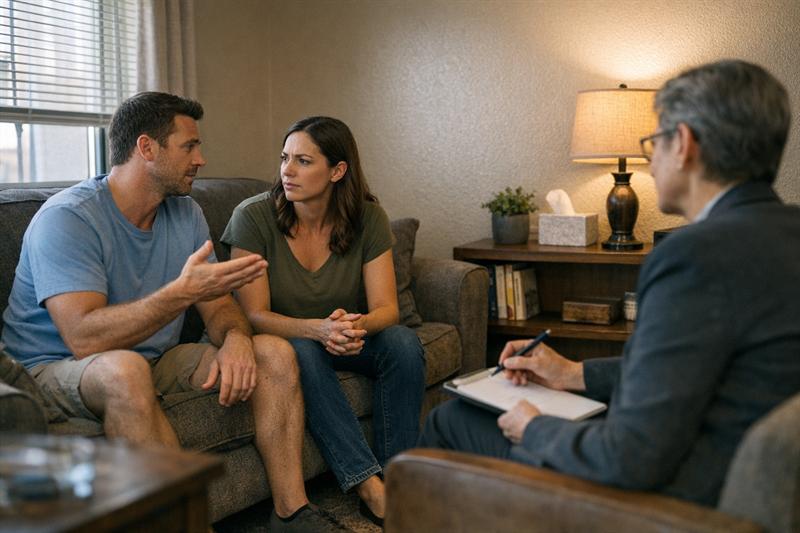
Relationship therapy adds structure when couples feel stuck. Instead of repeating the same conversations, the focus shifts to identifying patterns, building skills, and tracking what actually changes.
Healthy Relationships Counseling Services uses a skills-based approach combined with feedback-informed treatment. This helps couples see whether progress is happening and adjust as needed, rather than guessing what is working.
This approach can be especially helpful when disconnection has become the norm. It creates a clear process for rebuilding connection instead of relying on trial and error.
Services such as relationship therapy, discernment counseling, and telehealth coaching provide different levels of support depending on the situation.
If you have already tried to work on things without progress, it can help to understand what to do when couples therapy isn’t working.
Conclusion
Emotional disconnection does not usually stay neutral. It tends to deepen when patterns are left unchanged.
What starts as distance can turn into parallel lives, limited communication, and reduced intimacy. At that point, reconnecting often becomes more difficult because the pattern is more established.
Addressing it early is usually more effective than waiting for it to improve on its own.
Healthy Relationships Counseling Services helps couples identify the patterns behind the disconnection and replace them with skills that support meaningful change. The structured, feedback-informed approach gives couples a clear way to move forward instead of repeating the same cycle.
If the relationship feels distant or stuck, taking action now may be the most practical next step.
Key Takeaways
- Emotional disconnection develops gradually and often becomes the new normal
- It shows up in patterns like surface-level communication and repeated conflict cycles
- Stress, unresolved conflict, and attachment dynamics can drive the distance
- Reconnection requires changing interaction patterns, not just trying harder
- Structured support can help when the same issues keep repeating
FAQs
What is emotional disconnection in a relationship?
Emotional disconnection is when partners no longer feel emotionally connected, even if daily life continues. It often shows up as distance, limited communication, or feeling alone together. Recognizing it early can make it easier to address.
Can a relationship recover from emotional disconnection?
Yes, but it usually requires changing the patterns that created the distance. Couples who focus only on effort without changing how they interact often stay stuck. A structured approach can help create progress.
What causes couples to grow apart emotionally?
It often comes from repeated patterns like unresolved conflict, ongoing stress, or reduced emotional safety. Over time, these patterns can lead to withdrawal or reactivity that increases distance.
How do you reconnect emotionally with your partner?
Reconnection happens by changing how conversations and interactions work. This can include slowing down communication, checking in regularly, and repairing after conflict. Consistency is what helps rebuild connection.
Is emotional disconnection the same as falling out of love?
No. Many couples still care about each other but feel stuck in patterns that block connection. When those patterns change, closeness can return.
When should couples consider therapy for disconnection?
When the same issues repeat, communication breaks down, or distance continues despite effort, therapy may be the next step. It provides structure and guidance to help change what is not working.